Friday, April 21, 2017

Blog 22-27

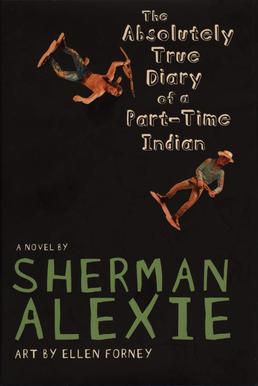
Alexie, S. (2007). The absolutely true diary of a part-time Indian. New York: Hachette Book Group USA.

            In this book, Arnold Junior is a special boy not only because he was born on the Indian reservation of Spokane but also, because he has a debilitating birth defect. He was born with cerebral spinal fluid on his brain that has caused brain damage and as a result he suffers from seizures. Despite his condition, Arnold is good at school and dreams of a life outside the reservation. So determined to become something and have a better future, he transfers to a better school outside his reservation. However, this decision costs him the respect of his peers on the reservation, his friendship with his best friend (Rowdy) and perhaps the lives of two family members.        
            This is a great book to tie into history and a lesson on Native Americans. Teachers can discuss the customs, traditions, dress and treatment and views (of those times) towards the Native Americans living on reservations.
Other Books by Sherman Alexie: Indian killer, The lone ranger and Tonto, Reservation blues, War dances

Books with similar themes: If I ever get out of here by Eric Gansworth, A step from heaven by An Na, The last summer of the death warriors by Francisco X. Stork

Trailer:

Lesson Plans:


Gordon, K. (2016). Slacker. New York: Scholastic Inc.

            Slacker is about a video game fanatic, named Cameron Boxer (a.k.a. Cam). Cam’s world is all about video games and his gaming skills as he prepares for the video game challenge of Rule the World. To keep from disappointing his parents, Cam and his friends (Pavil and Chuck) help him make-up a fake club at school, in which Cameron is president of. When the school counselor learns of this club, he decides to take on the club and many more members join. This fake club has now become a reality and Cam’s nightmare. To make matters worse, the club has undertaken a project of saving a community exit and creating a habitat for Elvis the beaver, and he no longer has time to play his video games. In this book, the author’s characters are relatable and believable. The story has a humorous tone and sends a message of how one person can make a difference if they try and the value of what is really important.

Other books by Korman Gordan: Masterminds: Payback is out, Restart, No more dead dogs, The 6th grade nickname game

Books with similar themes: Sticks & stones by Sarah Mlynowski, Save me a seat by Sarah Weeks, Soar by Joan Bauer

Book trailer:

Lesson plan:


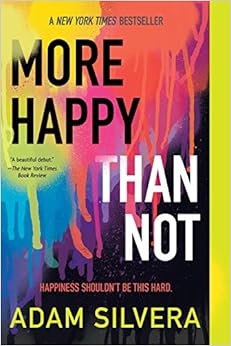
Silvera, A. (2015). More happy than not. New York: Soho Teen.

Selected as the NYT editor’s choice and YALSA’s Best Fiction for Young Adults, More Happy Than Not, is about a teenager named Aaron who is dealing with the aftermath of his dad’s suicide and his own attempted suicide. To top it all off, Aaron (whom had always thought of himself as straight) has developed feelings for his new friend Thomas. Thomas doesn’t reciprocate his affections and when the neighborhood crew got word of his gay tendencies they end up giving him the beating of his life. In this fictional time period people can go to a clinic and undergo a process called Leteo in which one is wiped of painful memories in order to lead a happy life. Now, Aaron must decide if he should wipe his mind of being gay. This book deals with the themes of sexuality, sex, homosexuality, self and morality. This makes the book most suitable for older students. After reading, students could have a debate about the pros and cons of the reality of Leteo existing on our society. The discussion of a fictitious aspect set in the reality of anti-gay Semitism gives the students a safe place to work through their thinking and feelings about making choices in a safer climate.
Other books by Adam Silvera: History is all you left me, They both die at the end,

Books with similar themes: Not otherwise specified by Hannah Moskowitz, What we left behind by Robin Talley, Anything could happen by Will Walton, Stick by Andrew Smith

Trailer:

Lesson plan:


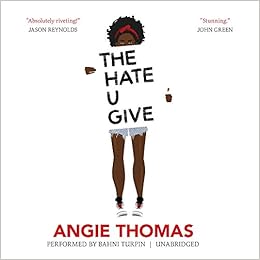
Thomas, A. (2017). The hate u give. New York, NY : Harper Collins Publishers.
            In the book The Hate u Give, the protagonist Starr Carter is a colored sixteen-year old high school student that lives a double life. By day she attends a prestigious, predominantly white high school called Williamson Prep. Outside of school Starr lives in a poor, violence filled black neighborhood of Garden Heights. Starr’s father is a former gang leader who is dedicated to improving their community, while her uncle is a police detective who lives in a safer neighborhood. The uneasy balance between these worlds is shattered when the police stop Starr and her childhood best friend, Khalil. Khalil, who is a young African American teen, makes an innocent move that causes the policeman to fatally shoot. The police’s lackadaisical attitude sparks anger and then protests in the community. Everyone wants to know what happened that night and the only person alive who can answer that is Starr. She must now decide what to say or do. The theme of racism, stereotyping and racial profiling of minorities is balanced with humor and Starr’s relatable yet innocently ignorant character. Students can discuss the realities of modern day racism and real life occurrences they might have experienced or seen on the media.
Other books by Angie Thomas: This is the author’s first debut book.
Books with similar themes: Dear Martin by Nic Stone, 27 hours by Tristina Wright, The perfect ending by Nisha Sharma
Trailer:

Lesson plans:


Yoon, N. (2016). The sun is also a star. New York : Delacorte Press, 2016.

            Written in a unique two-person perspective, this romantic fiction takes place in one day. Yoon’s novel portrays two characters that were destined to meet, Natasha Kingsley and Daniel Bae. Natasha is a Jamaican teenager who is facing deportation in less than 24 hours. Daniel, a Korean-American, was on his way to a college admissions interview with Yale when he crosses paths with Natasha. Drawn together, separated, and converging again, both teens recognize that they are falling in love and in a series of romantic moments; they end up spending Natasha’s last hours together in the streets of New York. The protagonists in this novel are so uniquely different that students could do a character analysis with each of the characters. Also, students can create a Venn diagram that compares and contrasts the similarities and differences between the two. A lesson tracing the series of events that lead to the climax (or the characters realization of love) could be followed. To tie in writing, students could create alternative endings to the story.

Other books by Nicola Yoon: Everything, everything, Meet cute: Some people are destined to meet, Alt eller intet

Books with similar themes: Holding up the universe by Jennifer Niven, The names they gave us by Emery lord, This adventure ends by Emma mills, The edge of everything by Jeff Giles


Trailer:

Lesson plans:


Yoon, N. (2015). Everything, everything. New York : Delacorte Press.

            Eighteen-year-old Madeline Whittier was born with Severe Combined Immunodeficiency or SCID. Madeline’s compromised immune system can’t handle exposure to viruses, allergens, bacteria, or deadly airborne particles. This has left Madeline confined to her spotless and decontaminated house in Los Angeles and never having felt sunshine on her face or grass on her bare feet. Most of Madeline’s time is spent living vicariously through novels and playing games with her mother. The possibilities of love and loss weren’t even a possibility until a new boy moves in next door. Oliver dresses in black and spends his days hanging out on his roof and shielding his mother and younger sister from his alcoholic, abusive father. Before long she finds herself in a series of analog window communication, hand gestures, nods, smiles, hours of instant messaging, inboxes full of emails, finally a secret rendezvous in sues with Oliver. This romantic tragic novel touches on the themes of romance, uncertainty, taking risks, terminal illness, abuse and death. Students can select a theme and use details and elements from the story to support their perspective of what message the author wanted to convey. The contrasting characters could also lend this book to create a comparison chart and character analysis within the story.
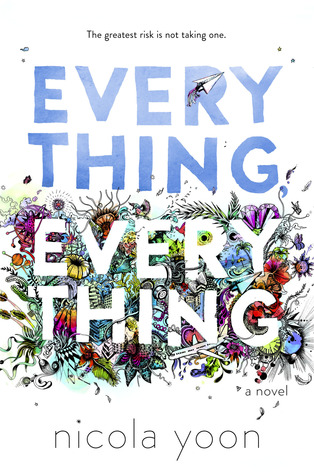
Other books by Nicola Yoon: The sun is also a star, Meet cute: Some people are destined to meet, Alt eller intet

Books with similar themes: The boy in the big black suit by Jason Reynolds, Don’t fail me know by Una LaMarche, Out of darkness by Ashley Hope Perez, One by Sarah Crossan

Trailer:

Lesson plans:


Saturday, April 15, 2017

5385 TxtBk Final Reflections

Final Chapter Summary
            The first two links under the introduction and welcome to class, talk about the generalities of what is Young Adult literature and what to expect in Dr. Lesesne class for the upcoming semester. The link of why do we share literature with children reviews the definitions of various literary elements and literary devices that are basic to the critical evaluation of YA literature. Review of these literary elements and devices such as allegory, conflict, hyperbole, mood and imagery is important because they are consistently used across genres. The divisions of the young people’s literature talks about how YA literature is divided according to the age categories. There’s children's literature (0-8 years of age), middle grade or tween (ages of 8-12), young adult (ages 13-18) and new adult (ages of 18-30). Knowing the divisions of age groups can help in choosing appropriate YA literature books. Genres and formats points out how there are only two true genres: fiction and nonfiction. Everything else is considered a subgenre or a branch of the two that occur in a wide range of formats. Poetry, drama, novels, chapter books, short stories, picture books, and graphic novels are all formats that are consistently mistaken for genres. The link on what is YA literature, consisted of a list that described the elements found in YA literature. It stressed on how YA literature mirrors concerns that adolescents face and draws upon a sense of how they develop. This is why it is the most popular form of literature. Chapter five, how adolescents develop, talks about the physical and intellectual development of adolescents. From Piaget’s stages of intellectual development, to Havighurst, Kohlberg, and Maslow’s hierarchy of needs, it covers all areas of development. Understanding the different theories of adolescent development can really make a difference on how we address the needs of our students. The literary elements chapter provides a refresher course on the various literary elements and devices through definitions and examples. Being aware of such can help us identify specific language techniques which writers use to create text that is clear, interesting and memorable. The Awards link covers the various literary awards given to YA books and their authors for literary distinctions across the genres and formats. Chapter eight on Poetry clearly states it is not a genre but instead a form of literature. Poetry is the most neglected type of literature in our schools that needs to be presented in a positive light that will allow children to enjoy it. The historical fiction link looks at stories and events set in the past. It is important that historical fiction stories blend in the history realistically and include accurate facts consistent with the time period. Chapter 10 on Realistic fiction (also known as modern or contemporary fiction) is literature set in modern times with themes and plots that are relatable. When choosing this genre of books, librarians must consider age appropriate topics. The Nonfiction link talks about a genre that covers a wide range of subgenres that includes biographies, autobiographies and memoirs that can be written in a narrative or expository approach. Chapter 12 on Fantasy and science fiction, defies the physicality of all reality and encompasses several subgenres. As a librarian understanding this genre will help to categorize and recommend books that appeal to all readers. Graphic novels are the last chapter. It states that graphic novels are not a genre but a format of writing where you can find various sub genres such as history, fantasy, and non-fiction. They can serve as a valuable teaching tool due to their literary elements and can help younger readers transition from picture books to chapter books. Overall, all the various topics covered in these chapter links have led me to have a better understanding of what YA literature consists of and the many different criteria across the genres, subgenres and formats.


5385 TxtBk Reflections 10-13

Ch-10 Realistic Fiction

Summary:
Realistic fiction is also referred to modern or contemporary realistic fiction because story settings are set in modern times thus, making them more believable to the readers. This portrayal of real-world problems, realistic characters, situations and societal views separates it from those of historical, fantasy and science fiction genres. The characters are engaging and believable. Problems faced by the characters are honestly portrayed with clear resolutions make sense. Theme or themes grow naturally out of the actions of the characters and the author does not appear to preach to the reader.
Reflection:
Realistic fiction is the type of genre that is most credible. Readers can experience situations or live vicariously through the characters in the story. Stories can also help readers empathize or identify with characters. Readers can make connections because they can see themselves in the story, in the characters or situations. When choosing this genre of books, librarians must consider age appropriate topics. Topics in this genre of books can range from death, abuse, drugs to sexuality and sexual orientation, amongst various other topics.
Ch-11 Nonfiction

Summary:
Nonfiction is a genre that spans over a wide range of subgenres. It includes biographies, autobiographies and memoirs that can be written in a narrative or expository approach. As Dr. Small mentions that it is the only genre that can’t be easily defined by what it isn’t. Evaluating this genre for reliable and accurate facts or events can be quite daunting. A resource one can utilize to do so is Nonfiction for young adults: From delight to wisdom by Betty Carter and Dick Abrahamson.
Reflection:

The video “Evaluating Nonfiction” states that the qualifications of a good nonfiction writer is of utmost importance so one must look at the qualifications of the author by looking at their websites, notes and researching their background history. Facts in the book must be accurate and not personal viewpoints. As librarians we obviously we would want to add books to our collection that are factually accurate. As librarians we must consider the criteria for selecting such books. This includes: purpose, scope and the organization of the book. The last criterion deals with the role of the visuals and how they help elaborate the text. When choosing nonfiction literature we must remember that children learn by taking in information, sorting it, and thinking critically with it. So, libraries must maintain a balanced collection that includes books that serve as mirrors and windows to the past through our nonfiction collection. 
Ch-12 Fantasy and Science Fiction

Summary:
Fantasy is a genre of books that defies the physicality of all reality. Like other genres, this also has criteria for evaluation. For example, characters must behave in a consistent and believable ways and the fantasy world must also have rules. The authors must provide readers with a “willing suspension of disbelief” and provide themes that explore universal truths. Dr. Perry’s video explored the types of Science Fiction books including the apocalyptic and post apocalyptic books. Others mentioned were dystopian books (like Hunger Games) and books that contain telepathy, clairvoyance and precognition. Robots, androids, cyborgs and artificial intelligence are another category. Finally books about aliens are also classified under science fiction. Science fiction is considered a subgenre within the realm of fantasy.
Reflection:

There is so much variety under the genre of fantasy and science fiction that might appeal to all types of readers, their preferences and perspectives. Understanding all the different categories that fall under fantasy or science fiction is a must. As a librarian understanding this genre will help to categorize and recommend books that appeal to all readers.
Ch-13 Graphic Novels

Summary:
Graphic novels are not a genre but a format of writing. Within this format you can find various sub genres such as history, fantasy, nonfiction. Graphic novels have been often overlooked and misunderstood but over the years graphic novels have gained in popularity. Since then they have become an important staple in classrooms and libraries and throughout all grade levels. There are several criteria to consider when selecting a good graphic novel. Some of these include tone, the ending focus and sequential nature of chapters. A good novel has characters that add texture to the story and its content hooks the reader.

Reflection:

Graphic novels can be used as a teaching tool because all the literary elements of a traditional story can be found in graphic novels too. While they can be fun reading, graphic novels offer a wealth of information for a wide range of readers. Graphic novels can help readers make a transition from picture books to chapter books with the use of graphic novels. Evidence suggests that graphic novels can be beneficial to students with special needs.


Tuesday, April 4, 2017

Book Blogs 16-21

Draper, S. (2010). Out of my mind. New York: Atheneum Books for Young Readers.

Out of My Mind is a novel by Sharon M. Draper is a New York Times bestseller book and nominated for NAACP Image Award for outstanding Literary Work for youths and teens. Written in a first person narration, this novel sheds light on the topic of Cerebral Palsy. In this story, the readers can vicariously experience this degenerative disease through the protagonist’s (Melody) first hand experiences and struggles as a person with CP. This story is about survival, determination and strength in the face of adversity. The author shows readers the inner beauty and strength of the eleven-year-old character that cannot walk or talk. People judge her and only see her disability. Determined to change people’s perceptions, she compensates with her brilliant photographic mind. 


Other Books by Sharon Drapper: Copper sun, Tears of a tiger, Stella by starlight, Forged by fire
Books with Similar Themes: Because of Mr. Terupt by Rob Buyea, The Brilliant Fall of Gianna Z. by Kate Messner, Turtle in paradise by Jennifer Holm
Book Trailer:
Lesson Plan Link:


Gardner, Sally.  (2012).  Maggot moon.  Somerville, MA:  Candlewick Press.

Maggot Moon by Sally Gardner is a 2015 Printz Honor book and winner of the Carnegie Medal. This story takes place in the 1950’s in an alternate dystopian English sector (zone 7) under a regime that enforces slavery through violence and deprivation. This is where we find 15-year old Standish Treadwell and his Gramps. Standish is a unique and severely dyslexic young man, who has one green eye and one blue eye whom views the world a different perspective. Through his courage, he decides to set out against the regime to find his new best friend and his family, whom have mysteriously disappeared like many others. This book touches on the themes of courage, friendship and rebellion as the protagonist stands up for what he thinks is right. Filled with symbolisms and metaphors, this book is great for teaching on the topics of world history, totalitarianism and regimes.   


Other Books by Sally Gardner: I, Coriander, The silver blade, The double shadow, The red necklace
Books with Similar Themes: Black helicopters by Blythe Woolston, Midwinterblood by Marcus Sedwick, In Darkness by Nick Lake, The white bicycle by Beverly Brenna
Book Trailer:
Lesson Plan Link:


Kim, S. (2010). Brain Camp. NY: First Second.

Kim’s Brain Camp was awarded ALA’s Quick Picks for Reluctant Young Readers, placed on the Texas Maverick Graphic Novels Lists and YALSA’s Great Graphic Novels for Teens. In this story, two 13-year-olds, Jenna and Lucas, find themselves at an invitation-only summer camp (Camp Fielding) where parents send their problematic children. Soon after arriving they discover strange disappearances and kids are turning into mindless brainy zombies amongst other strange occurrences. Brain Camp touches on the theme of living up to pressures of parental expectations. Written in a comic book style, this fantasy graphic horror novel is humoristic is filled with detailed pictures and informative dialogue. This book is appealing to reluctant readers and recommended for readers fourteen years of age and up.


Other Books by Susan Kim: City of spies & Wasteland (co-written with Laurence Klavan)
Books with Similar Themes: Zombies calling by Faith Hicks, The nameless city by Faith Hicks, Nothing can possibly go wrong by Prudence Shen
Book Trailer:
Lesson Plan Link:


Andrews, J. (2012). Me and Earl and the dying girl. NY: Harry N. Abrams. 

Nominated for the Top Ten Best Fiction for Young Adults list of 2013, this novel is written from the protagonist’s perspective, an awkward high school senior named Greg Gaines. Greg is a socially awkward high school senior who enjoys making films with his best friend, Earl Jackson. One day Earl discovers that an old crush and childhood friend, Rachel Kushner, has been diagnosed with Leukemia. He sets out to make a film for her. They grow closer together and he tries not to fall for her. After Rachel’s death, Greg decides apply to film school. This book’s theme touches on the emotional developmental issues of dealing with death, fitting in and love and relationships. Great follow-up extension novels could be The Fault in Our Stars by John Green, All the Bright Places by Jennifer Niven or We Were Liars by E. Lockhart, that could be used to compare and contrast.   


Other Books by Jesse Andrews: The haters
Books with Similar Themes: The girl in the Picture by Alexandra Monir, The Fault in Our Stars by John Green, All the Bright Places by Jennifer Niven or We Were Liars by E. Lockhart
Book Trailer:
Lesson Plan Link:


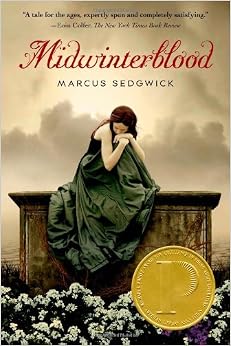
Sedgewick, Marcus. (2013). Midwinter Blood. NY: Roaring Book Press.

Sedgewick’s Midwinter Blood is a 2013 winner of the Micheal L. Printz award and consists of seven interlinked stories with the theme of love and sacrifice. The first is set in the future (2073), where Eric, a young journalist, visits an island where no one ages or dies and where he meets a woman with whom he has a strong connection. Subsequent chapters takes readers back in time and introduce the characters of Eric, Merle and the priest, who seem to know Eric but have never actually met him in person. Sedgewick’s gothic like novel provides a complexity that weaves readers through present and past occurrences that are somehow connected. This story covers Kohlberg's social development of post conventional level of moral development and doing what is right. Student’s can write extensions that are for or against the morality of the characters in the story.


Other Books by Marcus Sedgwick: The ghosts of heaven, She is not invisible, White crow, Floodland
Books with Similar Themes: Dreamquake by Elizabeth Knox, Repossessed by A.M. Jenkins, Hard love by Ellen Wittlinger
Book Trailer:
Lesson Plan Link:


Brown, D. (2013). The great American dust bowl. Boston, MA: Houghton Mifflin.

This graphic novel tells the story of the Great American Dust Bowl and is set at the beginning of the drought of 1931. It details a terrifying and telling story of how giant black dust clouds filled the darkening sky, destroying homes, cars and suffocating animals and people. Its effects were inescapable and created harsh winters and summers, creating a plague of insects and rodents. Desperate to end the ceaseless dust, people turned to superstitions and rain dancers. The government set out to plant trees, grass and educate farmers on how to work the fields to avoid over cultivation and erosion. Listed among the Graphic Novels for Teens Outstanding Books for the College Bound in 2015, this book not only touches into a historical American event but also, can be used to teach Science concepts of tectonic plates, droughts, erosion, soil conservation and cultivation. This book is recommended for grade levels 7 and up.


Other Books by: Kid blink beats the world, Alice Ramsey’s grand adventure, Far beyond the garden gate
Books with Similar Themes: Uncommon traveler: Mary Kingsley in Africa by Juanita Havill, Parrots over Puerto Rico by Cindy Trumbore, Barbed wire baseball by Marissa Moss
Book Trailer:
Lesson Plan Link: